

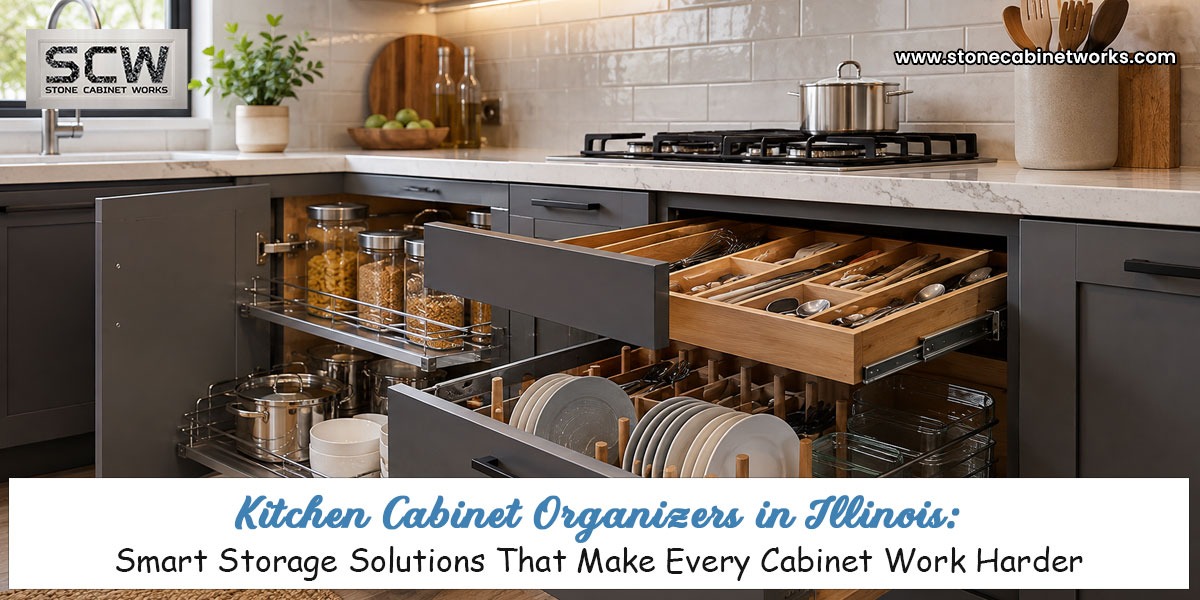
A kitchen can have plenty of cabinets and still feel short on storage. The problem is often not the amount of cabinetry, it’s how the available space is organized. Deep corner cabinets become difficult to reach, drawers fill with mismatched utensils, and everyday appliances take over valuable countertop space. That’s where well-planned kitchen cabinet organizers in Illinois can make a meaningful difference. From pull-out pantry systems to drawer dividers and corner storage, the right kitchen cabinet storage solutions can turn overlooked space into practical, accessible storage.
For homeowners planning a kitchen remodel, the best time to address storage is before the cabinets are installed. This allows organizers to be incorporated into the cabinet layout instead of being added as an afterthought.
Why Kitchen Storage Is About More Than More Cabinets?
Adding cabinets isn’t always the answer. A poorly organized 36-inch cabinet may provide less practical storage than a smaller cabinet equipped with the right pull-out or drawer system. Good kitchen storage should make it easy to:
- See what you have
- Reach items without moving everything else
- Keep frequently used items close at hand
- Separate different categories of kitchenware
- Use awkward corners and narrow spaces
- Keep countertops free of unnecessary clutter
The goal is usable storage, not simply more storage.
1. Pull-Out Pantry Cabinets for Narrow Spaces
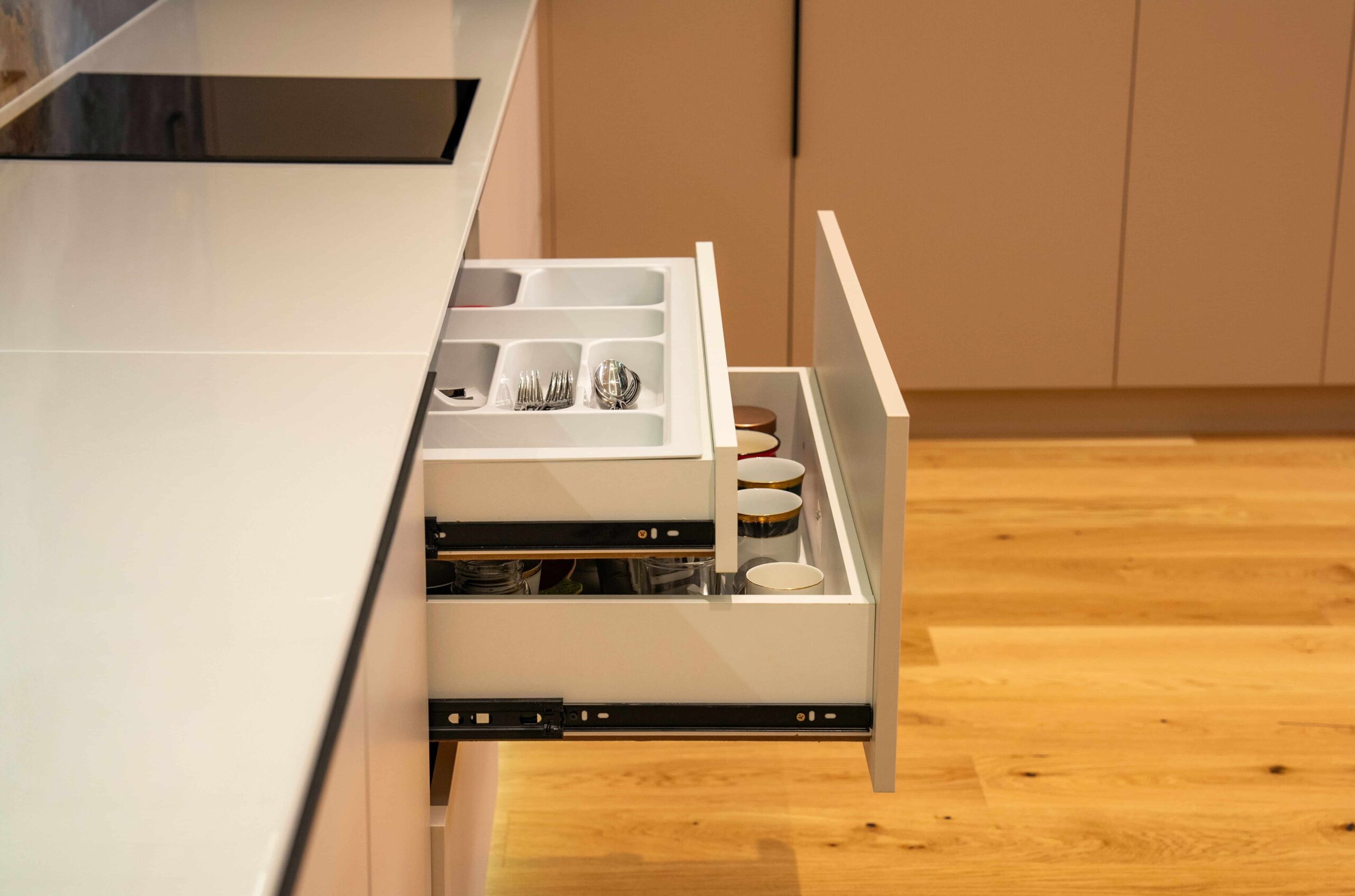
Narrow cabinets are sometimes difficult to use efficiently, but they’re excellent candidates for pull-out storage. A pull-out pantry can organize:
- Canned goods
- Spices
- Cooking oils
- Sauces
- Baking ingredients
- Packaged foods
Instead of reaching into a deep cabinet, the entire storage system comes toward you. This is particularly useful in kitchens where a traditional walk-in pantry isn’t practical.
2. Deep Drawers for Pots, Pans, and Heavy Cookware
Lower cabinets can become frustrating when pots and pans are stacked on top of one another. Deep drawers provide a much more accessible alternative. They’re ideal for:
- Pots
- Pans
- Mixing bowls
- Dutch ovens
- Small appliances
- Food storage containers
Because the entire drawer pulls out, you can see what’s inside without kneeling down and reaching toward the back of a cabinet. For families that cook frequently, this can be one of the most useful kitchen cabinet storage upgrades.
3. Make Corner Cabinets Easier to Access
Kitchen corners are notorious for wasted space. Traditional corner cabinets can leave homeowners with a large amount of storage that’s difficult to reach. Depending on the cabinet design, options may include:
- Lazy Susans
- Corner drawers
- Pull-out shelving
- Swing-out organizers
- Blind-corner accessories
The best solution depends on the cabinet configuration and the items you plan to store.
This is one area where professional kitchen design can make a significant difference. The organizer should be selected with the cabinet layout, rather than trying to force an accessory into an unsuitable space afterward.
4. Add Drawer Dividers Where Organization Matters Most
A large drawer can quickly become a mess without internal organization. Adjustable dividers can create dedicated sections for:
- Cutlery
- Cooking utensils
- Measuring tools
- Serving pieces
- Kitchen towels
- Food storage accessories
The advantage of adjustable systems is flexibility. If your storage needs change, the configuration can adapt accordingly.
5. Use Vertical Cabinet Space for Baking and Cooking Tools
Flat items often waste valuable horizontal storage. Vertical dividers can create dedicated spaces for:
- Baking sheets
- Cutting boards
- Serving trays
- Cooling racks
- Pizza pans
Instead of stacking these items, store them vertically so you can remove one without disturbing everything around it. This is a simple example of how thoughtful kitchen cabinet organizers in Illinois can improve everyday functionality without requiring additional floor space.
6. Create a Dedicated Spice Storage Area
Spices often disappear into deep cabinets or overcrowded drawers. A dedicated spice organizer can keep bottles visible and accessible. Depending on the kitchen design, spices can be stored in:
- Narrow pull-out cabinets
- Drawer inserts
- Tiered shelves
- Door-mounted organizers
The right location is usually near the food preparation area, where spices are easy to reach while cooking.
7. Give Small Appliances a Permanent Home
Coffee makers, blenders, mixers, toasters, and air fryers can quickly consume countertop space. Instead of storing them wherever there’s room, consider creating dedicated cabinet storage. Options include:
-
Appliance Garages
A countertop-level cabinet can conceal frequently used appliances while keeping them accessible.
-
Lift-Up Appliance Shelves
For heavier appliances, specialized lift mechanisms can make it easier to move equipment from cabinet storage to the countertop.
-
Dedicated Appliance Cabinets
Larger cabinets can be designed around the dimensions and electrical requirements of specific appliances. Planning these features during a remodel is much easier than trying to retrofit them later.
8. Don’t Forget the Space Under the Sink
The area beneath the kitchen sink is often difficult to organize because plumbing occupies part of the cabinet. That doesn’t mean it has to become a cluttered collection of cleaning supplies. Consider:
- Pull-out trays
- Adjustable bins
- Door-mounted storage
- Recycling containers
- Cleaning-supply organizers
The storage system should accommodate the existing plumbing rather than interfere with it.
9. Add a Hidden Trash and Recycling Center
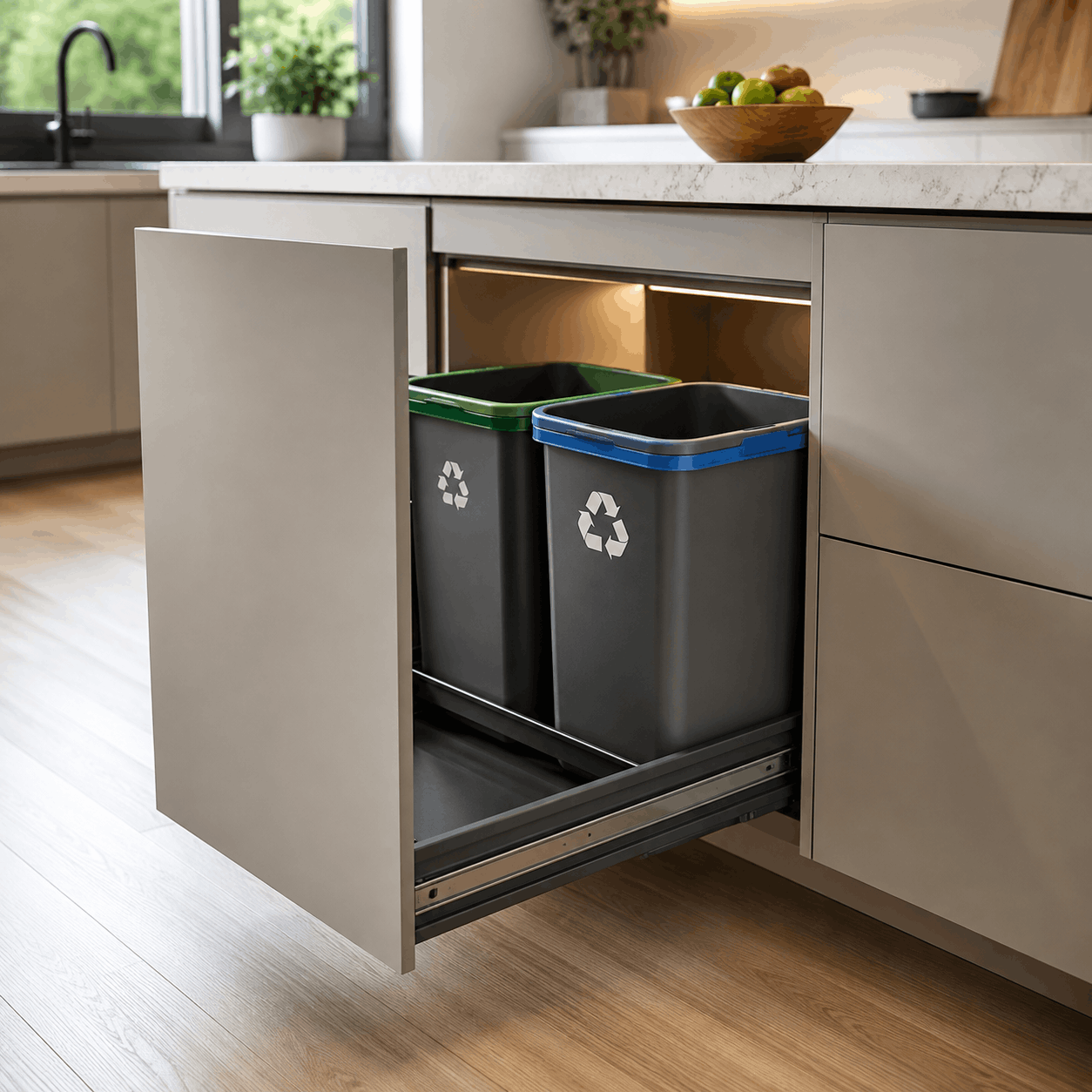
Freestanding trash cans take up floor space and can interrupt the appearance of an otherwise organized kitchen. A built-in waste and recycling cabinet can keep containers conveniently located while keeping them out of sight.
Ideally, this cabinet should be positioned near the food preparation area. The exact location should depend on your kitchen’s workflow and available cabinet space.
10. Use Toe-Kick Space for Extra Storage
The small recessed area beneath lower cabinets is usually overlooked. In some kitchen designs, toe-kick drawers can provide discreet storage for items such as:
- Baking trays
- Serving platters
- Pet supplies
- Kitchen linens
- Infrequently used flat items
It’s not a replacement for full-size cabinets, but it can turn otherwise unused space into useful storage.
Storage Solutions Should Follow Your Lifestyle
There is no single list of “must-have” organizers that works for every homeowner. A family that cooks every day may need extensive cookware and pantry storage.
Someone who rarely cooks may prefer more space for small appliances, beverages, or entertaining supplies. Before selecting kitchen cabinet storage solutions, make a list of the items you currently struggle to store. Ask:
- What is always sitting on my countertop?
- Which cabinet is hardest to reach?
- What do I use every day?
- What do I only use occasionally?
- Where do pots and pans currently go?
- Do I have enough pantry space?
- Which items are creating clutter?
These answers provide a much better starting point than simply choosing the latest storage accessory.
How to Plan Cabinet Organizers During a Kitchen Remodel?

If you’re remodeling your kitchen, don’t wait until the cabinets are already ordered to think about organization. A better process is:
Step 1: Inventory Your Kitchen
Identify everything that needs a home.
Step 2: Group Similar Items
Keep cookware, food, utensils, cleaning products, and appliances organized by category.
Step 3: Identify Problem Areas
Look for cabinets that are difficult to access or consistently become cluttered.
Step 4: Design the Cabinet Layout
Determine where drawers, pantry cabinets, corner storage, and specialty organizers should go.
Step 5: Match Organizers to Cabinet Dimensions
Not every accessory fits every cabinet. Measurements matter.
Step 6: Plan Around Appliances and Plumbing
Storage should work with refrigerators, ovens, sinks, dishwashers, and other fixed elements.
Step 7: Think About Future Needs
A kitchen should remain functional as your household changes.
Custom Storage vs. Add-On Organizers
Homeowners generally have two approaches to improving kitchen storage.
Add-On Organizers
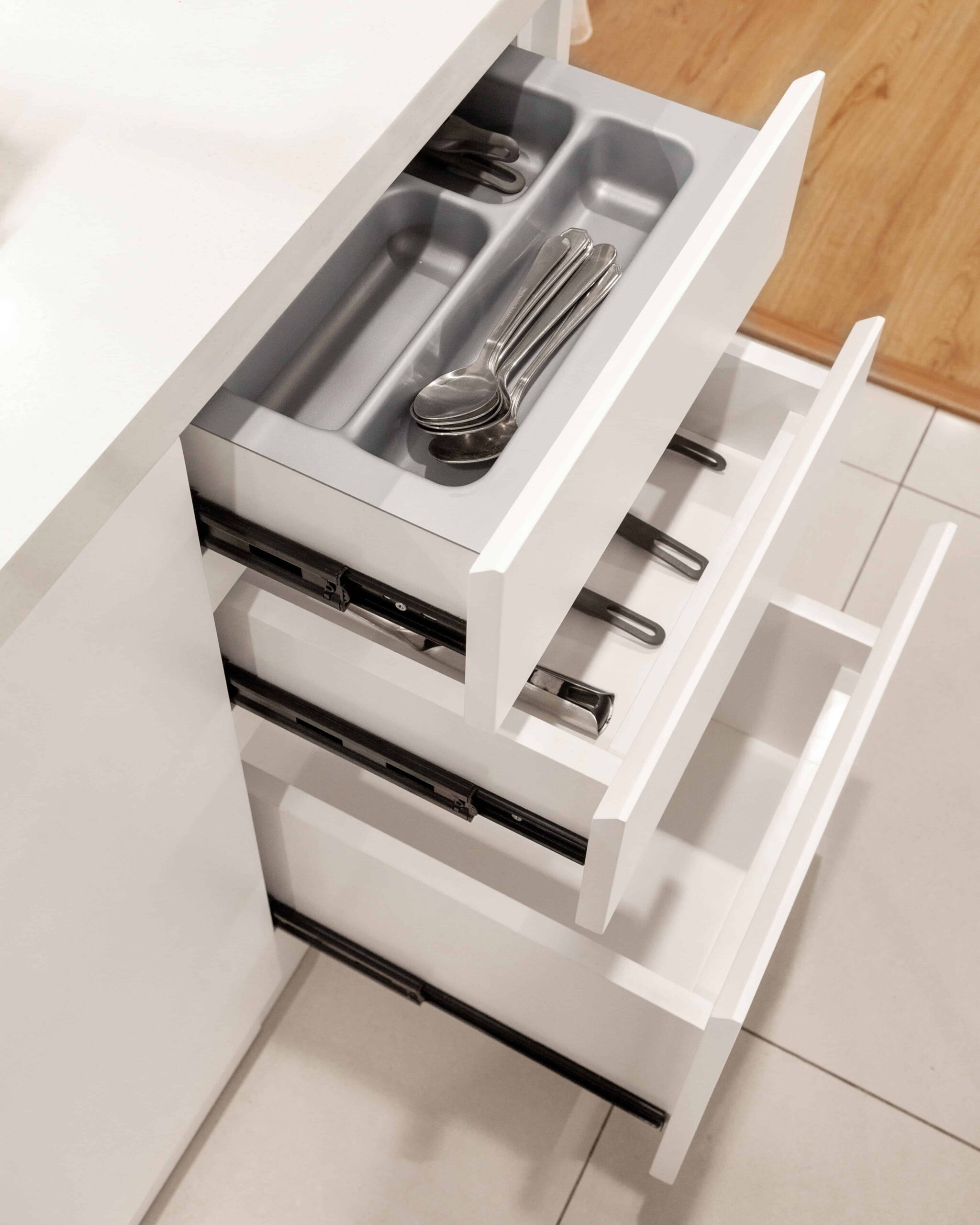
These are products installed inside existing cabinets. They’re useful when:
- The cabinets are in good condition
- You don’t want a full remodel
- You need a relatively simple organizational upgrade
Integrated Cabinet Storage
These solutions are planned as part of a new kitchen. They can provide:
- Better space utilization
- More precise dimensions
- Coordinated cabinet layouts
- A cleaner finished appearance
- More comprehensive organization
If you’re already replacing your cabinetry, integrating storage into the design often provides the most cohesive result.
Common Kitchen Organization Mistakes to Avoid
1. Buying Organizers Before Measuring
An accessory that looks perfect online may not fit your cabinet dimensions.
2. Adding Too Many Specialty Features
Not every cabinet needs a specialized mechanism. Choose organizers based on actual storage needs.
3. Ignoring Accessibility
Storage should be easy to reach and comfortable to use.
4. Forgetting Countertop Appliances
If you have several appliances that live on the counter, plan dedicated storage for them.
5. Designing Without Considering Workflow
The location of storage matters. Everyday items should be positioned close to where they’re used.
What Should You Look for in Quality Cabinet Organizers?
Not all storage hardware performs equally. When evaluating organizers, consider:
- Weight capacity
- Smooth operation
- Adjustability
- Construction quality
- Corrosion resistance where appropriate
- Ease of cleaning
- Replacement or warranty support
Hardware that carries heavy cookware or pantry items needs to be built for repeated daily use. Quality storage should make your kitchen easier, not create another component that requires frequent adjustment or replacement.
Why Professional Kitchen Design Can Improve Storage?
Good storage starts with good planning. A professional kitchen designer can look at the entire room not just individual cabinets and determine how storage should interact with:
- Cooking zones
- Food preparation areas
- Refrigerator
- Sink
- Dishwasher
- Pantry
- Appliances
- Traffic flow
This holistic approach prevents a common problem: having plenty of cabinets but still not having a logical place for everything.
For Illinois homeowners planning a kitchen renovation, incorporating kitchen cabinet organizers during the design stage can create a more functional kitchen without necessarily increasing its size.
Make Every Cabinet Count
The best kitchen storage isn’t necessarily the kitchen with the most cabinets. It’s the kitchen where everything has a logical place and the things you use most are easy to reach.
From deep drawers and pull-out pantries to corner organizers and dedicated appliance storage, the right kitchen cabinet storage solutions can make everyday cooking and cleanup considerably easier.
If you’re planning a kitchen remodel in Illinois, consider your storage needs at the beginning of the design process. Working with experienced professionals can help you select kitchen cabinet organizers in Illinois that fit your cabinets, your lifestyle, and the way you actually use your kitchen. A well-organized kitchen doesn’t just look cleaner. It works better every day.
Frequently Asked Questions
1. What are the best kitchen cabinet organizers?
The best organizers depend on your storage needs and cabinet configuration. Pull-out pantries, deep drawers, corner organizers, drawer dividers, vertical tray storage, and under-sink systems are among the most useful options for many kitchens.
2. Are kitchen cabinet organizers worth the investment?
They can be, particularly when they solve a specific storage problem. The value comes from making existing cabinet space easier to access and more useful.
3. Can organizers be added to existing cabinets?
Yes. Many organizers can be retrofitted into existing cabinetry, provided the cabinet dimensions and construction are compatible.
4. Should cabinet organizers be planned before a kitchen remodel?
Ideally, yes. Planning storage before cabinets are ordered allows the layout, cabinet dimensions, and organizers to work together instead of requiring compromises later.
5. How can I create more kitchen storage without adding cabinets?
Pull-out organizers, deep drawers, vertical dividers, corner solutions, appliance garages, and other interior accessories can increase the usability of existing cabinet space without expanding the kitchen.